
Selected work
The Ultra Minute
Making a complicated sport easier to follow.
I started The Ultra Minute because it was the newsletter I wanted to read. Following trail and ultrarunning meant piecing together race results, athlete posts, podcasts, and stories from all over the internet. I loved the sport. I didn’t want to spend all day keeping up with it.
Today, TUM is my main independent project: a publication, a collection of interactive stories, and a reference guide to the people and races we cover.

Start with something worth opening.
The newsletter gives readers a quick way to follow the sport twice a week. Results sit alongside athlete stories, independent reporting, podcasts, and the business and culture around running. Each item is short, with a link to go deeper.
That editorial work is also where I find product ideas. Sometimes a result raises a question a few sentences can’t answer. Sometimes a name keeps coming up, and a reader needs the backstory. I can follow those questions from research through design and into a working experience.

What does six days of running actually look like?
Megan Eckert’s six-day race gave me a reason to turn the official timing data into an interactive story. Readers can follow the rhythm of the race, select an individual lap, and see how the distance accumulated across days and nights.
The important design work was deciding what the data could honestly show. A long interval between laps might include time off the course; it doesn’t tell us whether she was sleeping. I kept those limits next to the charts, where readers encounter them.
I also cut comparisons that made the distance sound impressive without helping anyone understand the performance. Each view needed to answer a useful question.
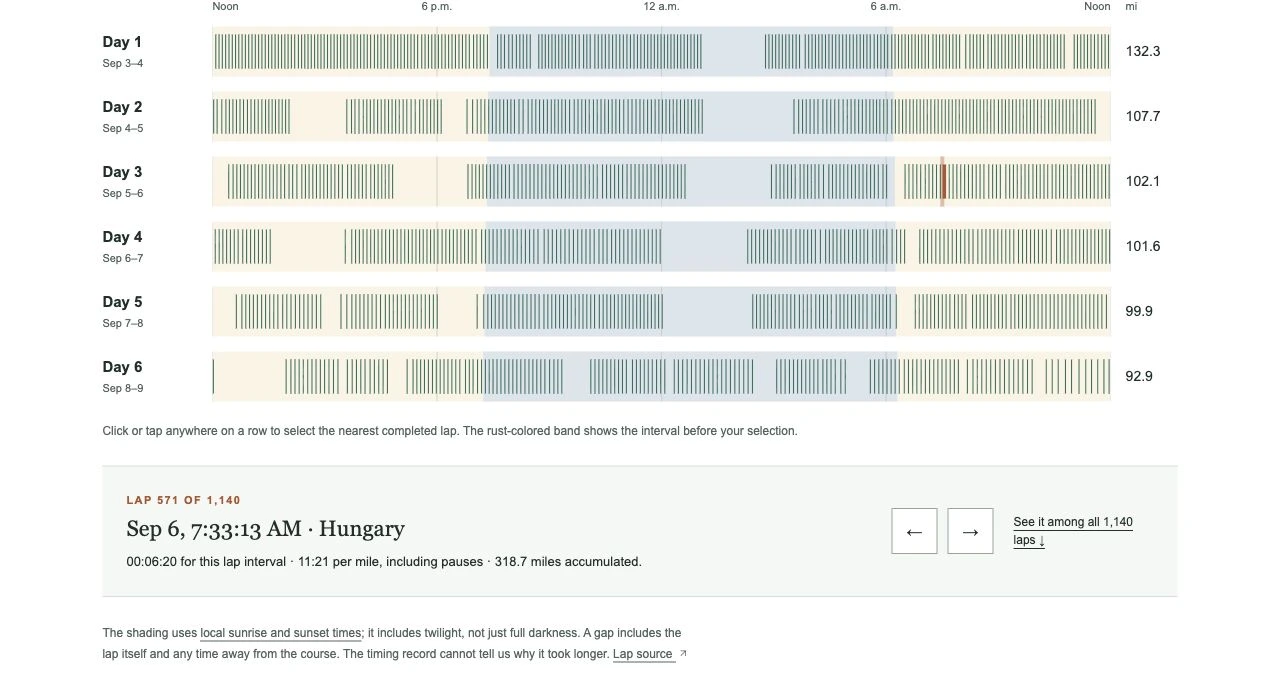
See the same selection in the lap explorer
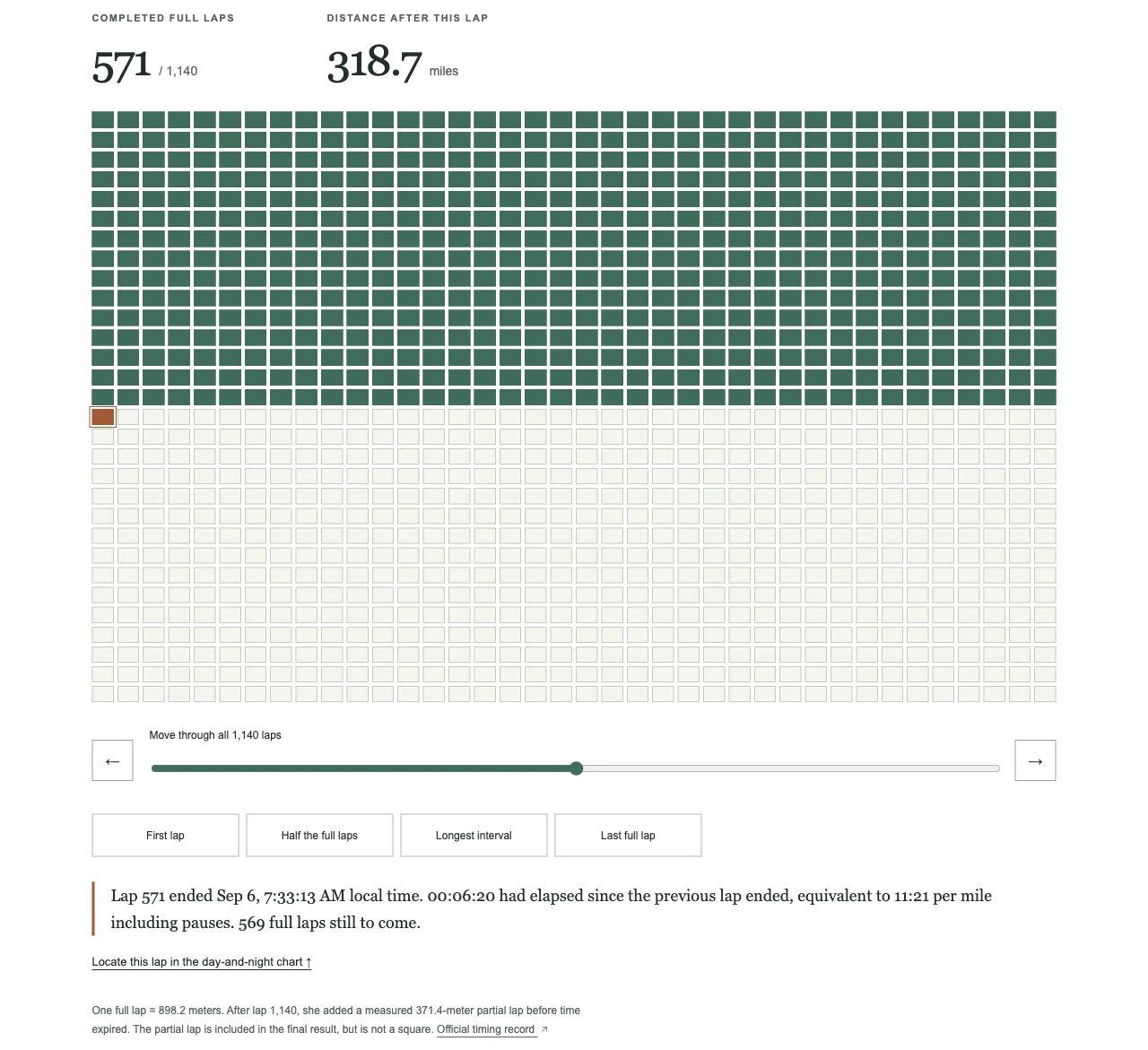
Help a reader get their bearings.
For Tor des Géants, I built a different kind of companion: an interactive course preview, contender profiles, and comparisons with American long-distance races.
Readers can take a guided tour or explore the course themselves. Familiar races provide a reference for the distance and climbing, without pretending those numbers amount to a difficulty ranking. Links to the original podcast discussion give people another way into the story.
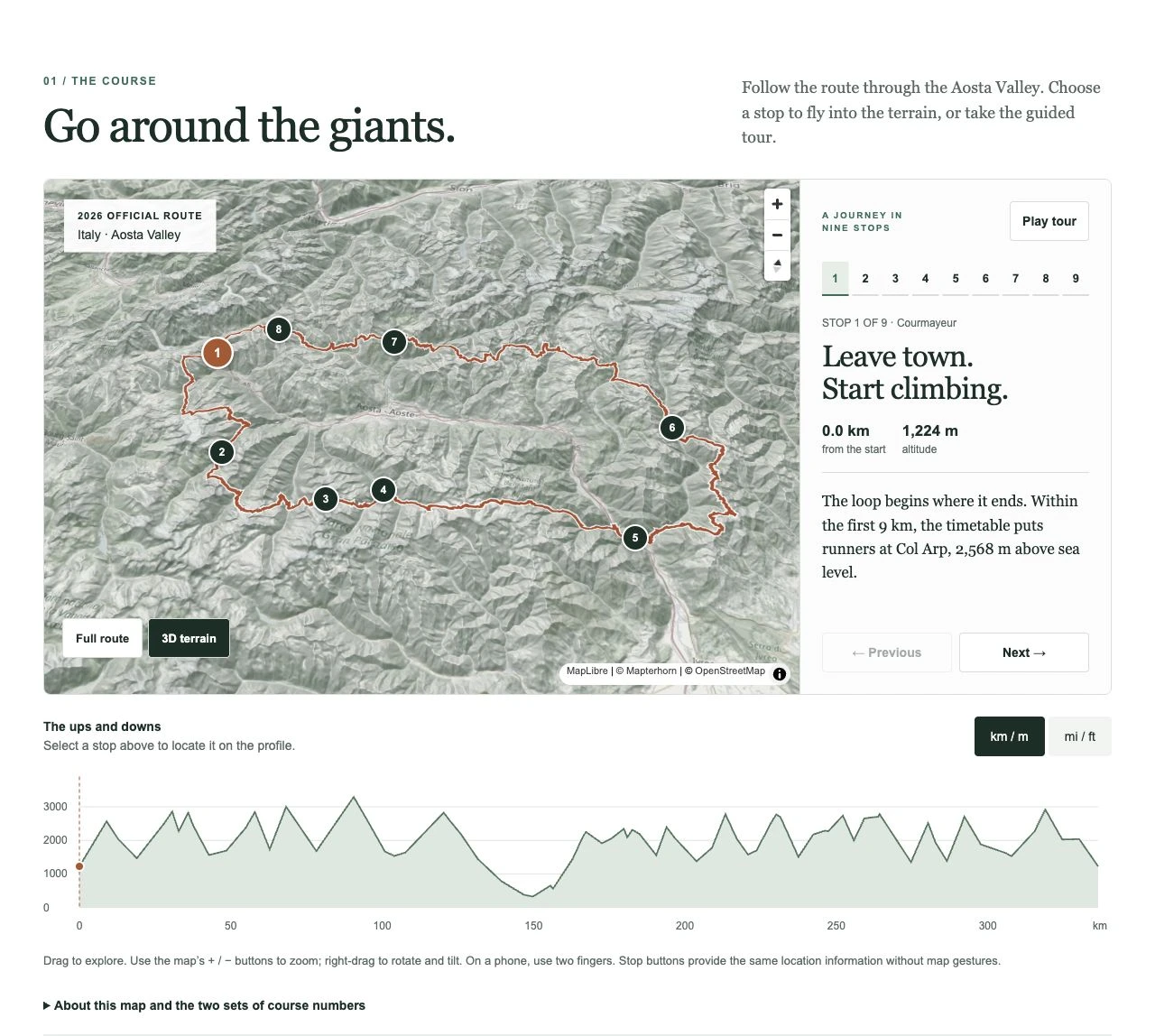
Give the archive a second life.
The newsletter keeps moving. Its useful context shouldn’t disappear into old emails.
I built the TUM guide around the people, races, and organizations in that coverage. A reader can search for a name, browse an issue, catch up on past mentions, and follow connections to other profiles.
Getting the structure right meant simplifying it. The homepage leads with search. Browsing one issue stays visibly different from browsing the whole directory. Coverage is central on profile pages, with source material close by. Historical reporting retains its dates so an older story doesn’t masquerade as a current fact.
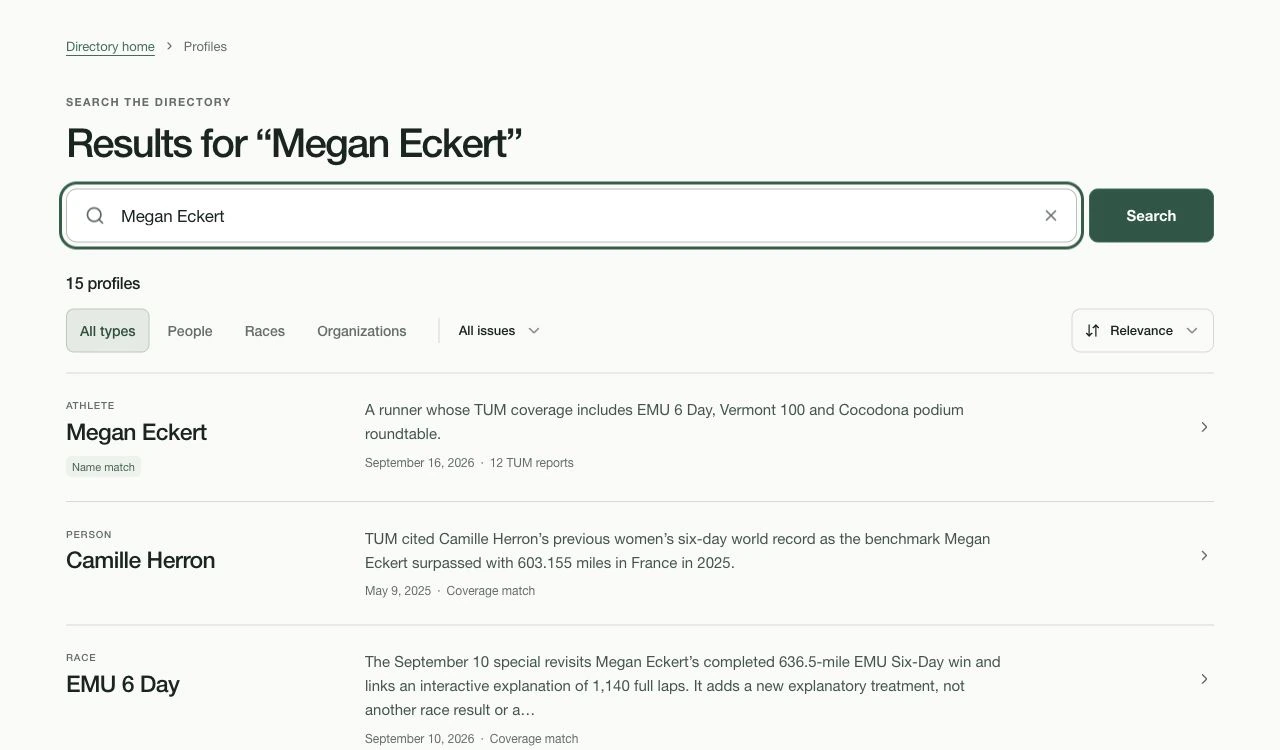
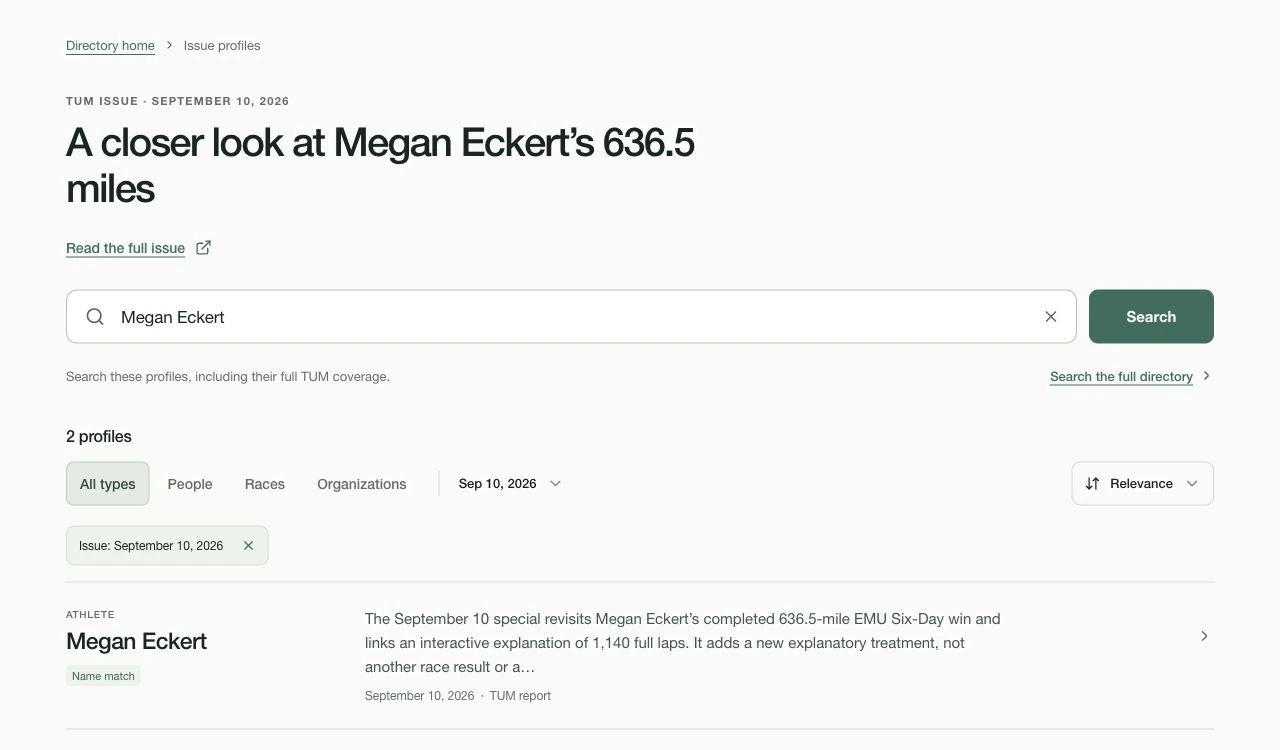
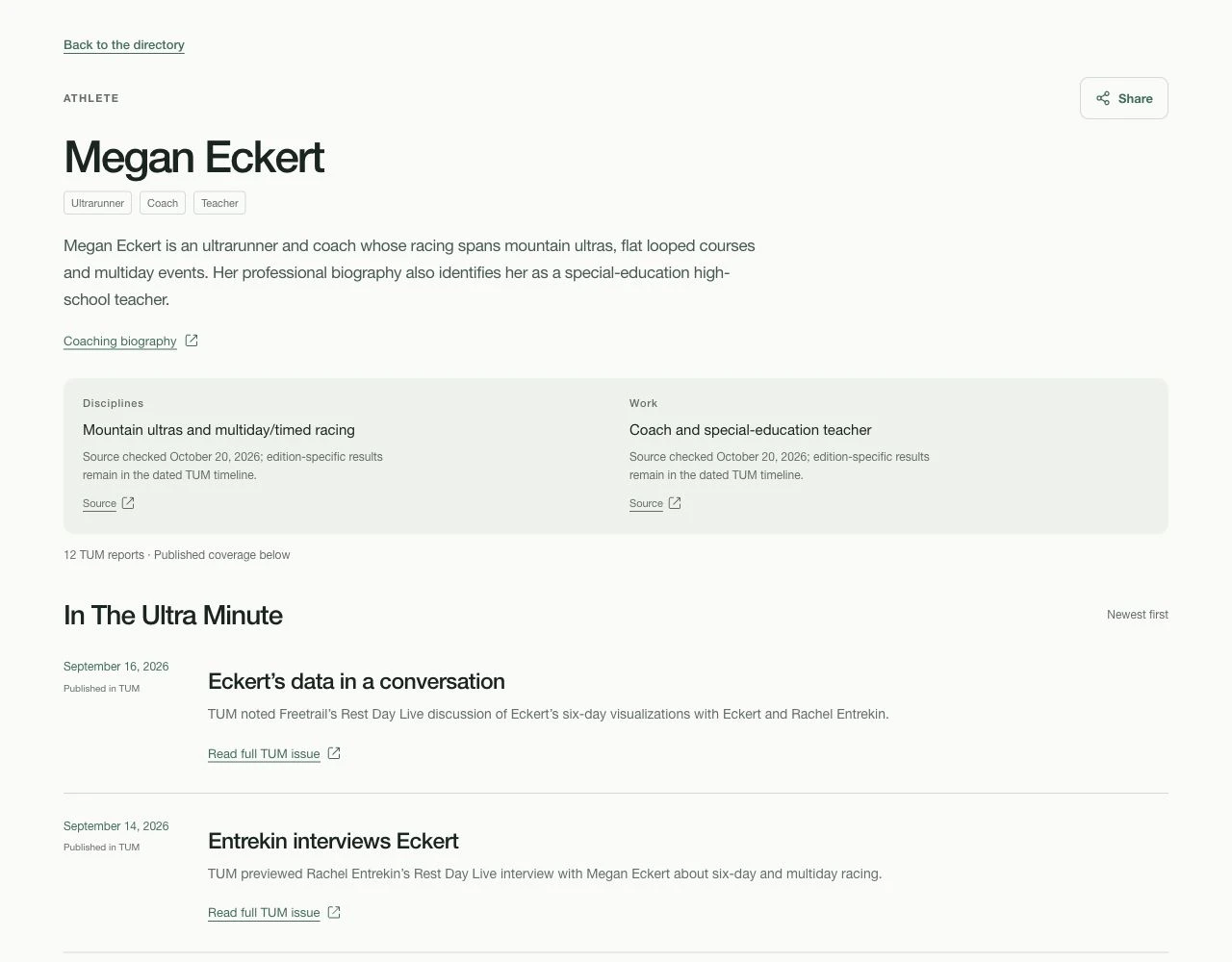
Search, issue scope, and dated coverage stay connected without becoming the same view. Select a screen to inspect it.
A small publication, built hands-on.
AI helps with sourcing, research, and production. I choose what belongs, review and edit the coverage, and make the final editorial decisions.
That combination lets me work across the whole product: the issue someone opens, the feature they share, and the reference they come back to. It also gives me a place to keep practicing what I enjoy most: finding a useful question and making something people can explore for themselves.